
Your Child Doesn't Need a Trainer. They Need You.
A look at what childhood and parenting are actually for, and why it's so much deeper than getting them to obey us.

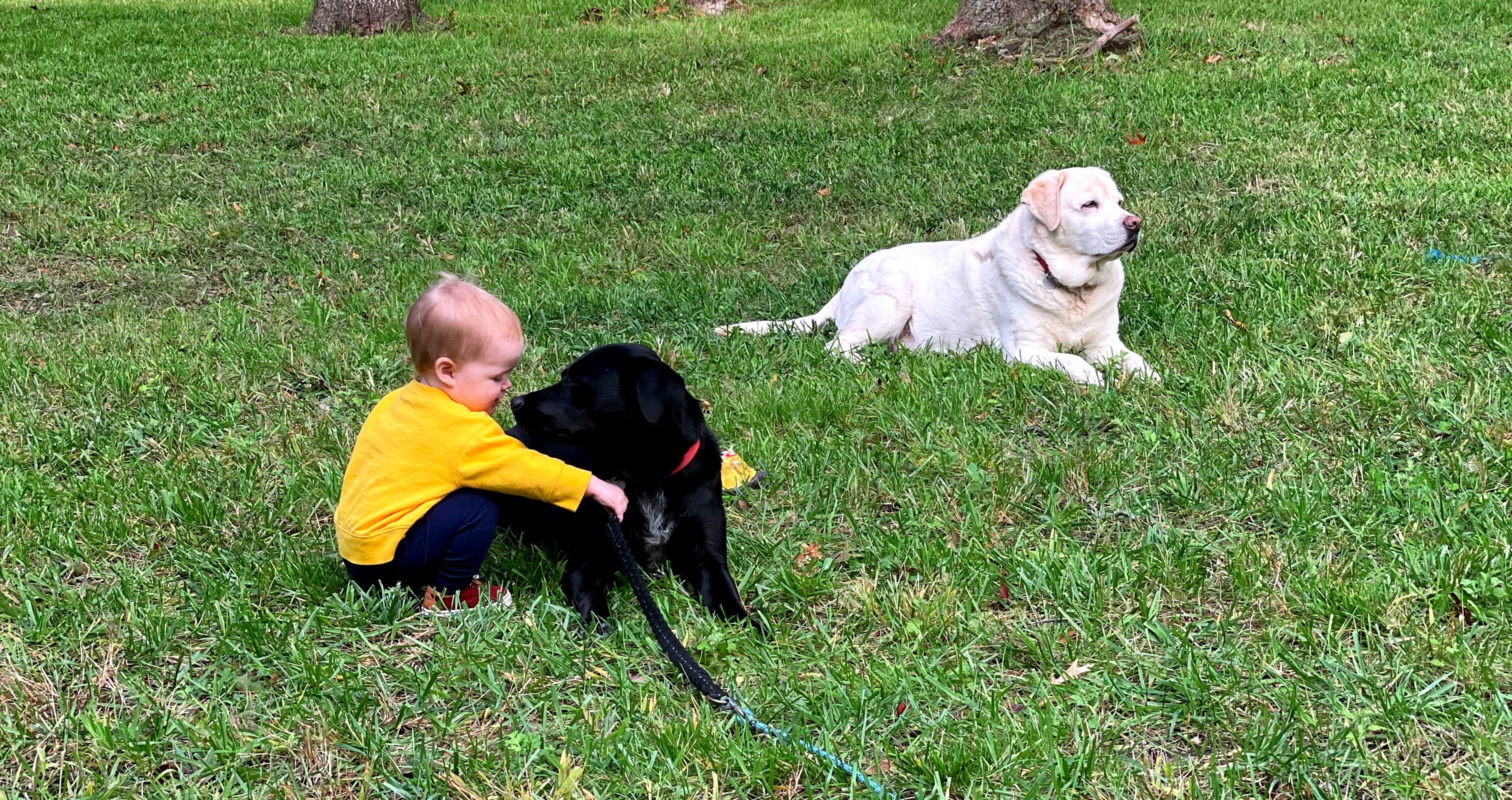
I’ve read a few notes, articles, and comments this week about parenting that made my heart race. I quickly felt anger rising within me, and an overwhelming urge to scream, “you’ve got this all wrong!!! Children are not dogs!!”
I’ve sat with this feeling for a few days and reflected on why I’m so upset. I mean, parenting is a touchy subject and there are many different ways to do it. I genuinely believe most parents are doing the best they can with the information they have. That’s part of why I’m here. I think parents want to do right by their kids, they just don’t always have what they need to do it.
So why did this make me so angry?
A tiny part of me was definitely frustrated that decades of research were just being waved off in favor of someone’s confident opinion. But I realized that wasn’t most of it. Most of it was about a misalignment of what parenting even is. And what childhood is for.
The relationship matters
Research in neuroscience, attachment, and early relational health have boomed in the last thirty years or so. The science is clearer than it’s ever been about what young children need and what their developing brains can actually do. Which is amazing, but unfortunately it hasn’t all trickled down yet. A lot of parents have never been told any of it, or they have, but it was confusing or too rigid and didn’t seem to apply to them. And all the added noise online from parenting “experts” and people loudly and confidently declaring the “right” way to do things often gets to them first.
That’s what was sitting in my chest. It wasn’t just that someone on the internet was wrong. People are wrong on the internet every day. It was that this idea, this framework, reduces the entire experience of parenting and childhood to an obedience and compliance relationship. Which leaves out an entire piece of the puzzle. Perhaps the most important piece of the puzzle. It leaves out that we are relational creatures. We are wired for connection and attachment. We are different from dogs because we have a deep level of emotion and love and trust and a complex neural network that takes in millions of pieces of information every day and uses that to shape our relationships with ourselves and with others.
Parenting is about so much more than raising obedient children. And childhood is about so much more than learning to comply with the rules of the world.
The obedience trap
The framework that has gotten me so worked up is essentially one that says children under seven or eight don't have real reasoning skills and therefore should be trained like puppies. The focus is on habituation through rewards and punishments, so kids learn the rules of society and become compliant, obedient creatures. There's no room for feelings or emotions, because they're irrelevant. The parent is in charge and the child must learn that. No exceptions.
To some degree, I get it. It’s not entirely wrong. Kids absolutely do need structure, boundaries, and expectations. Parents do need to be in charge. All of that is true.
What I don’t love is the assumption underneath this—that any parenting that makes room for a child’s feelings is automatically permissive. That caring about what’s happening inside your kid means letting them run the show. That making space for feelings and emotions is being “soft.” None of that is true. You can hold a limit AND pay attention to what’s happening underneath your kid’s behavior. In fact, I’d argue, you should.
The other piece about this framework that really irks me is one that flattens what childhood is about. Children are born without knowledge of how the world works, but are biologically wired to turn to us for guidance. The puppy training model assumes that if a child is not behaving the way we want them to, it’s because the parent hasn’t laid down the law hard enough yet—that if they stay consistent with punishments and rewards, the child will find the tools they need and start using them. That, in turn, means it’s up to the child to find the tools they need to succeed. And that “success” is a standard that the adult sets.
The problem with this is, children don’t just magically find tools to regulate emotions, tolerate frustration, or process disappointment. And they certainly don’t get them by being drilled into compliance or obedience. We know from the research that these tools are built slowly, over time, through thousands of tiny interactions. We recognize they don’t have those tools yet, and we help them find them. We don’t yell at them or punish them for not accessing something they literally do not own.
Childhood is like a building project
Let me put it another way.
Childhood is sort of like a building project. Kids are learning to construct their internal world. They’re learning to create systems that let them manage frustration, wait their turn, sit with a hard feeling, notice when they’re needing space, and so on. None of that is pre-built. Some of it comes more naturally to some children than it does for others, but all children need to learn these skills.
The idea that children should be trained into compliance is essentially like handing a child a picture of a finished project with no instructions and saying, “Make it look like this. Do not come back to me until it’s finished and it’s correct.” But offering no guidance, no assistance, and no acknowledgement that it’s perfectly fine if they can’t do it yet. When that is the guidebook you’re working with, the project gets messy. The child will probably cobble something together, they’ll tape rickety pieces together and try to build something that looks roughly like the picture from the outside, because that’s all they’re being shown. And maybe it looks good from the outside, maybe it doesn’t. But either way, if no one is teaching them how to find the tools they need and how to use them, and perhaps most importantly, if—as a human being wired for attachment—they’re left to figure it out on their own, they’re never going to actually learn. At best, they’ll learn to make it look good from the outside, while the inside is crumbling. At worst, they’ll think it’s a personal and moral failure that they couldn’t figure it out. When in reality, they didn’t have the support and the guidance they needed to get there.
The importance of early relational health
What clinicians who are trained in and study early childhood development would tell you is different. We operate from the lens of early relational health—which is a framework that looks at the importance of early relationships on children’s development. We recognize that we are connected and in tune with our children. We exist within a relationship. We are not simply two people where one is in charge and one is submissive.
We still have the picture of the finished project, and we want to help our kids get there. But the difference is that we recognize that there is no way they can build that on their own. And it’s our job as parents to help them learn how. Slowly. At their pace. We’re saying “of course you don’t know how to do this yet. Nobody does at three. Nobody does at five. I’m going to meet you where you actually are, not where I wish you were.”
This actually accomplishes two things. It allows us to walk beside our kids and help them in a way that makes more sense for their development. But more important than that—it gives them a sense of safety and acceptance that is felt, not logically understood. They not only learn the skills we want them to learn, but they deepen their sense of connection with us.
We matter too
There’s one more thing I want to say about this, because I don’t see it being said enough.
Most of the conversation about parenting young children focuses on what the child needs from us. As it should. But it leaves out something important: we are in the relationship too. And I don’t mean that in the sense that our children need to take care of us. Absolutely not. But I’m saying we can’t forget about us. We can’t forget that we are part of it.
When we approach parenting through the puppy training lens, we are essentially reducing ourselves to trainers. Our job is to deliver the rewards and punishments consistently and correctly, and the child’s job is to respond. There is no room in that framework for the parent to be a person with their own internal system, their own nervous system, their own learning happening alongside their child’s. They are a robot that needs to correctly program the tinier robot.
But that’s not what we are. We’re not just the trainer for our kids. We matter too. And they matter. And it’s all a relational circle.
When we attune to our kids, we’re not just helping them. We’re also practicing staying with ourselves through a hard moment. We’re refusing to be someone who treats the small humans in our house as problems to be solved. We are also then modeling for them how to support someone through a tough time. See? It’s a circle.
And yes—we have more authority. Of course we do. Kids cannot and should not ever feel like they’re more in charge than their parents. But that’s not because authority is some badge of honor we wear. It’s because we are their safe container. The reason it matters that we’re in charge isn’t dominance. It’s safety. A child can only go out and explore the world if they know they have a safe place to come back to. Someone who wants them to be able to succeed, and will help them get there, but will not resort to isolation or shame when they fail.
Parenting and early childhood is so much bigger than getting kids to obey or comply. It’s bigger than avoiding meltdowns or building a child who says yes all the time. It’s about shaping who we are as parents, and who they are as human beings. And, hopefully, we want more for our children than obedience. We want them to explore the world, to take risks, to come up against hard things and learn how to handle them. We want them to come back to us when they need to. We want them to know themselves.
And we want that for ourselves too.
Raising children is hard. And it’s deeply personal. I have real respect for that. I’m not writing this from a place of judgment.
But I do think this is so incredibly important and something I want all parents to at least understand. And because I am in the field, I see how this plays out. Yes, I am a mother, and that shapes the way I see this work and brings a different perspective. But I have also worked with children, families, and adults for over 10 years. I’ve been in homes, clinics, and hospital rooms.
I have sat across from too many people who were trained, as kids, into a version of themselves their parents could accept—and who had to spend years trying to untangle all that training to find who they really are. People who learned, very early, that the safest thing to do was to make it look good from the outside. People who could not afford, as small children, to fall apart in front of the people who were supposed to catch them.
That’s what’s underneath all of this for me. That’s what I cannot unsee.
So when I say the relationship is the work, I don’t mean it as a slogan. I mean: the relationship is what gets remembered. It’s what shapes who they become. It’s the part of childhood that stays with them when everything else fades.
Thank you for writing this important piece, Libby. Beautifully and necessary 🙏🏽
This is beautifully put. Especially the part about us being in the relationship too.
I want to push it one step further.
Being present and attuned matters enormously. But I think what children need even more is a parent who is someone. Not just regulated and available — but visibly living a life that means something to them.
Children are watching. If parents sacrifice too much, they conclude that adulthood means self-erasure.
The safe container you describe is real and necessary. But a child also needs to see that the container is full of something worth growing toward.
They don't just need us to catch them when they fall. They need us to show them somewhere worth going.